
The War Inside the War
Iran doesn't need to win. It just needs to keep this war painful enough for its adversaries

Dear readers, good morning.
I know many of you have families in Lebanon, in Dubai, and across the Middle East. I do too. I hope everyone is safe and okay. I just wanted to note that this newsletter has always been a space for macro analysis and writing about the global picture in no way diminishes the humanitarian catastrophe unfolding.
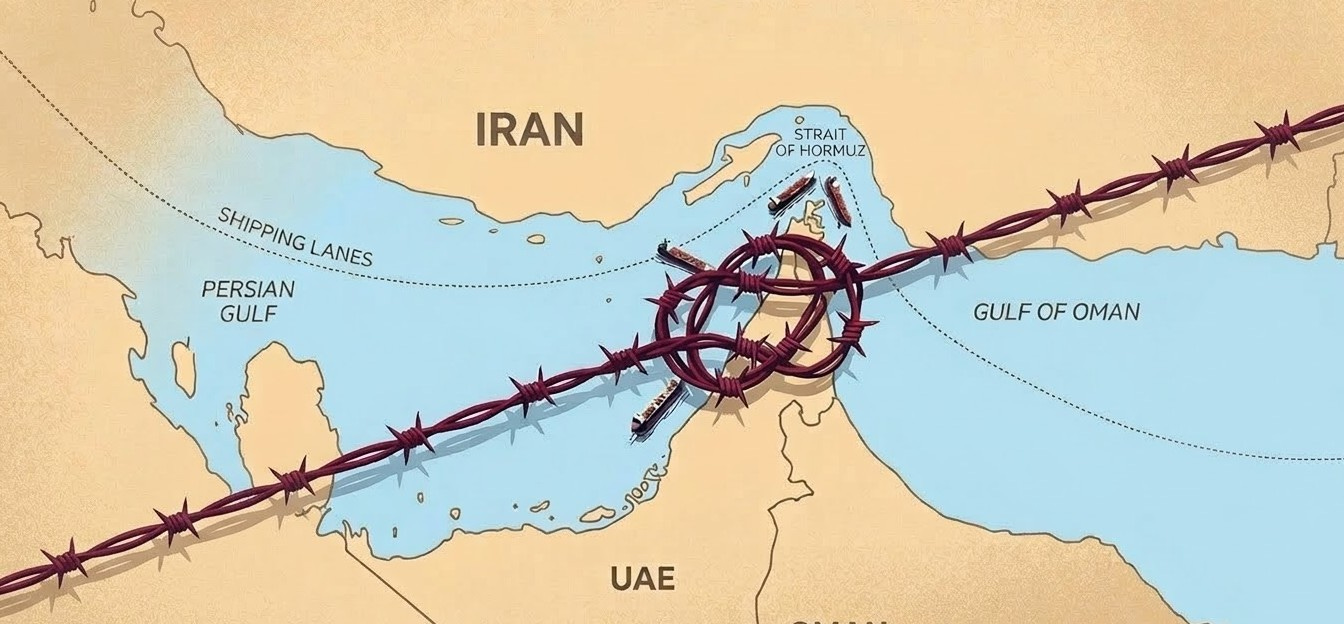
Two weeks in, here is what this war is actually becoming about: Energy flows and shipping routes. Day 14, below the debrief:
The Regime that was supposed to fall
Following the death of Ali Khamenei on the first day of the conflict, Iran moved to appoint his son Mojtaba as Supreme Leader. What many hoped might become a moment of rupture has produced the opposite: the regime has not collapsed, and the protests that shook the country in January have not resumed. Militarily and infrastructurally, the regime has been degraded (by how much is still unclear) but the bombardments are generating nationalism, not collapse.
The Islamic Republic is resilient not because it is loved, but because it is institutionally entrenched. The Iranian Revolutionary Guard Corps feeds on two things: victimization and the narrative of resistance against the US and Israel. This war is giving them both.
US-Israel: two visions, no endgame
It has become clear in the past days that the United States and Israel do not want the same thing from this war.
Israel is not troubled by the question of what comes after. Disarray is the plan. A degraded, fractured Iran suits Israeli strategic interests regardless of what fills the vacuum.
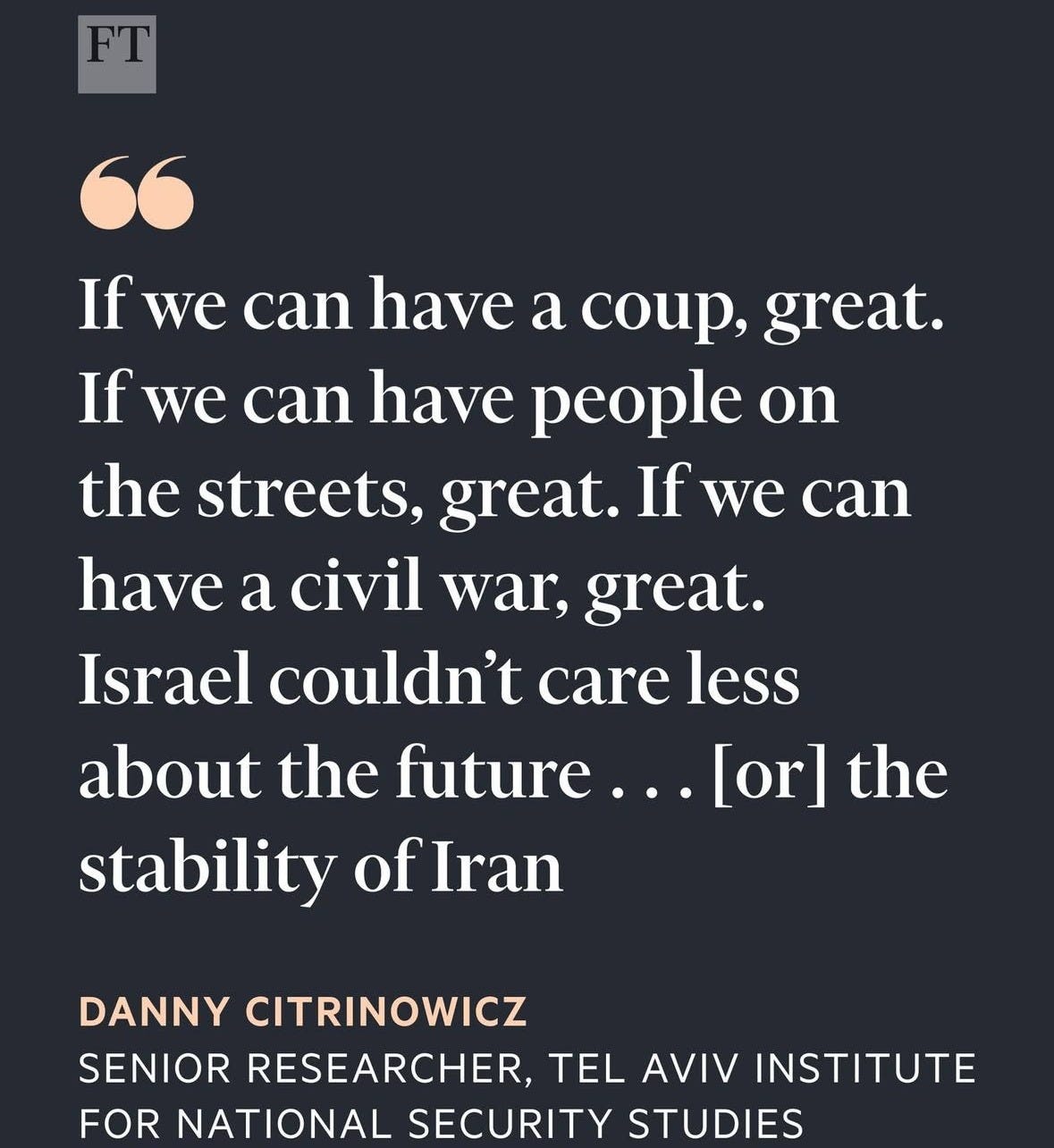
The United States, by contrast, seems to have wanted something closer to a Syria-style restructuring: a weakened state that could be repositioned as a regional ally. Those visions are incompatible, and the gap between them is where any endgame disappears.
Senator Chris Murphy stated last week that regime change is not a stated US war goal1. Democrats emerging from classified briefings have publicly complained that the administration has not explained its objectives, its timeline, or what success looks like. So what exactly is the American plan? It is the question that as of today, no one in Washington can answer.
The Strait of Hormuz: Iran’s Real Weapon
Here is what Iran understood very quickly: they do not need to win a war militarily if they can make the cost of continuing unbearable. And now, that’s the plan.
Before this conflict, around 20% of the world’s oil and a major share of Gulf LNG exports moved through the Strait of Hormuz. That waterway is now the central economic front and the Iranians have identified where the pressure point is for Donald Trump, who will always react first and foremost to one thing: markets. So what is his pain point? Around $100 a barrel. If prices move toward $150 and stay there, the damage to growth and inflation becomes severe2.
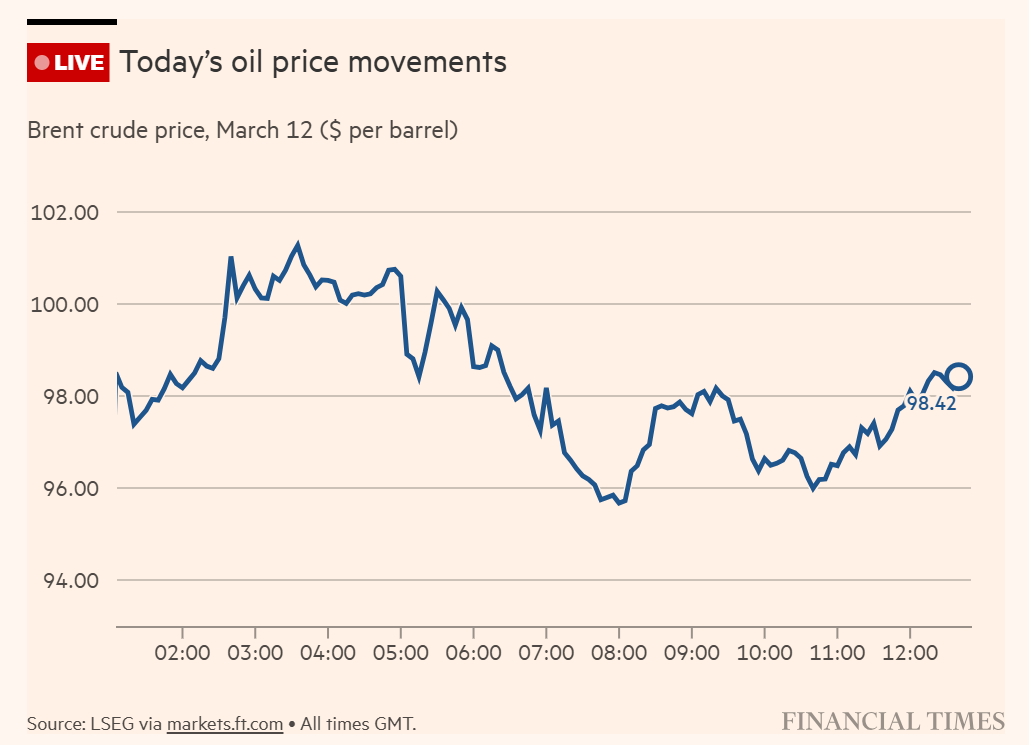
That is why the administration’s messaging keeps shifting. One day the war is nearly over; the next, it hasn’t reached its peak. Trump needs markets to react to any positive signal, because the underlying reality is that this war will last. There is simply too much leverage on both sides to let it go. And why would Iran surrender while being bombed? Because the regime feeds on the current situation, can inflict pain on the US and the world, and the opposition has no space to speak up.
How Iran is waging war against the world too
Global supply chains were already fragile after COVID and Ukraine. They are now being pushed further. How?
Ships reroute —> Insurance is pulled—> Industrial inputs tighten —> Refining systems adjust.
So this is not anymore just an oil shock. Gas, fertilizers, metals, they all move through the same arteries. Shut those down and supply chains seize up in countries that have never even heard of the Strait of Hormuz. And the Gulf’s oil fields are not a tap you turn back on. Shut them in, and the damage takes months to unwind, even if the war ends tomorrow.
For those in the Middle East especially, this is not abstract. Everything depends on these routes staying open, from food imports to industrial activity.
Why 360 million barrels is not enough
This week, the International Energy Agency announced the largest emergency reserve release in its history: 360 million barrels. That sounds enormous. But economically, it is not. Here’s why:
Releasing reserves sounds dramatic but it is not a tap you can fully open overnight. The maximum you can physically pump out per day is around 2 million barrels. The current disruption is roughly 18 million barrels per day. Do the math, the release barely dents it and the gap is still significant. It might calm markets but does not replace the missing oil.
And then there is the risk no one is talking about: stockpiling. When people sense a shortage coming, they don’t wait, they fill up early and overbuy. Governments also do it. China has been doing it quietly for months. If the rest of the world follows, you don’t just have a supply problem anymore. You have a shortage that feeds itself, and at that point no reserve release in the world stops it.
There is no policy response that stops this. Not at this scale and speed.
Which is why the meeting between Xi and Trump at the end of this month may matter more than anything happening on the battlefield right now. That is where the real negotiation over energy and supply chains, is likely to begin.
The lesson every government is learning right now
The lesson markets are drawing from this war is stark: energy dependency is not an economic inconvenience. It is a national security liability.
Europe and Asia are especially exposed, dependent on LNG and hydrocarbons moving through Gulf-linked routes, with no obvious cushion sitting idle. Energy demand is rising structurally, and AI data centers are pushing up domestic power needs faster than anyone anticipated.
Every government watching this crisis is running the same calculation: how much of your economy depends on energy routes you do not control?
This is where the clean energy and nuclear conversation stops being ideological and becomes strategic. The world is deeply interlinked and increasingly fragmented, and this war is showing us exactly what those costs.
And let’s not forget: whatever happens between the US and Iran is now operating on its own logic, separate from Lebanon. Israel has made clear it intends to keep destabilizing the region, and a Lebanese invasion is no longer unthinkable. Let’s hope any of the leaders come to their senses before it’s too late.
Chris Murphy on X
Financial Times Webinar, “War in the Middle East”